In international organizations, allowing the people development means understanding business needs, valuing differences across markets and preparing teams to navigate change.
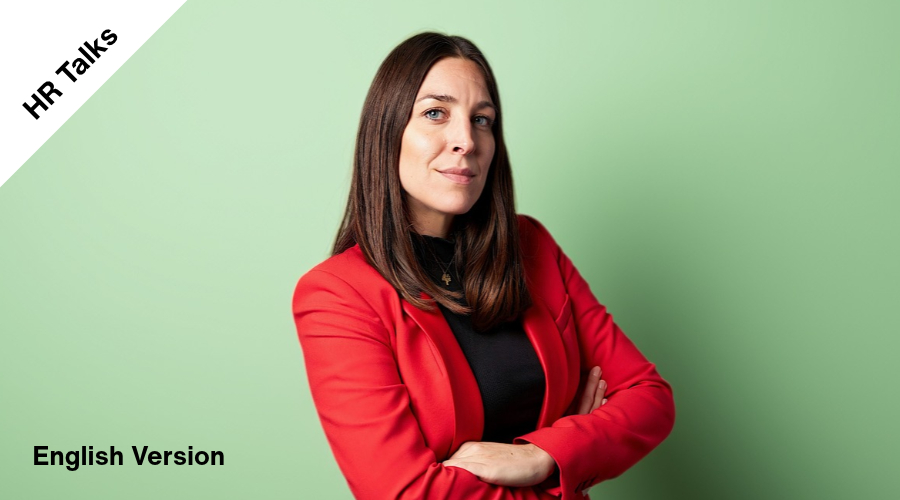
We discussed these topics with Laura Granel, Culture & Development Senior Manager Southern Europe at ODEON Cinemas Group, who oversees People & Culture activities in Spain, Italy, Germany and Portugal. Together, we explore the strategic role of Learning & Development and our collaboration on projects across Europe.
Could you tell us about your role within ODEON Cinemas Group and what your work in Learning & Development involves?
Laura’s role covers several areas of People & Culture, from talent management and leadership development to Learning & Development, Diversity & Inclusion and talent attraction.
«My role brings together different areas of People & Culture, including talent management, leadership development, learning, diversity & inclusion, and talent attraction.
As part of an international organization, with our Group headquarters in the UK, my role has two key dimensions. On one hand, I work to connect our Group strategy with the specific needs and priorities of each market. On the other, I lead the design and implementation of initiatives specifically developed for Southern Europe, responding to our regional challenges and business priorities.
For me, it’s about understanding both the bigger picture and the day-to-day reality of our business, translating those priorities into meaningful initiatives that help our people grow, strengthen our culture and ultimately contribute to the success of the organization».
What has your experience in Learning & Development taught you about what really makes people development effective in international organizations?
For Laura, an effective development project always starts with understanding the real need. In fact, the initial request for a training programme does not always correspond to the actual challenge the organization needs to address.
«One of the biggest lessons I’ve learned throughout my career is that effective people development starts with truly understanding the need behind the request.
Very often, when someone comes to L&D asking for a training programme or a development initiative, what they are sharing is just the tip of the iceberg. Our role is to go deeper, ask the right questions and understand what’s really happening beneath the surface. Sometimes, the real challenge is quite different from what was initially presented».
This in-depth understanding also requires practical knowledge of the business, its strategy and the direction in which the organization is heading.
«But understanding the need is only part of the equation. We also need to understand the business, its strategy and where the organization is heading. This allows us to connect today’s challenges with tomorrow’s priorities and design solutions that are truly relevant».
There is another aspect Laura considers essential: the value of learning goes beyond acquiring knowledge; it lies in its ability to generate tangible change.
«L&D is not just about providing learning opportunities. It’s about creating the conditions for learning to translate into real change. Because, at the end of the day, the real value of development is not simply what people learn, but what they do differently as a result».
What does it mean to work in an international and multicultural organization from a Learning & Development perspective?
Working for people development in international organizations means encountering different ways of communicating, learning and engaging in development experiences on a daily basis. For Laura, this is one of the most rewarding aspects of her role, but it also requires flexibility when designing learning initiatives.
«Personally, I love working in an international and multicultural environment. It’s one of the aspects of my role that I enjoy the most, but it also comes with an important lesson: what works brilliantly in one country doesn’t necessarily work in another.
We all have different ways of learning, and culture also plays an important role in shaping how people interact, communicate and engage in development experiences. That’s why flexibility and cultural awareness are essential when designing learning initiatives».
As Laura explains, the differences do not necessarily concern the content itself, but rather the way learning initiatives are delivered and facilitated.
«For example, the same training programme might need a different approach in Italy than in Germany, not necessarily in terms of content, but in how we facilitate it, encourage participation or create engagement.
And this is where collaboration becomes so important. Building strong relationships with local stakeholders and external partners helps us understand those cultural nuances and adapt our initiatives to the reality of each market».
However, the multicultural dimension is not simply a challenge to manage.
«Working across different cultures allows us to challenge our own assumptions, learn from different perspectives and bring the best ideas from one market to another. For me, the key is finding the right balance between having a shared vision and respecting what makes each market unique».
What are the main priorities for people development within international organizations, such as ODEON, today, and how do you see the role of Learning & Development evolving?
Looking at ODEON’s people development priorities, Laura identifies three main areas: strengthening leadership capabilities, developing talent and skills for the future, and fostering a culture of continuous learning.
«For me, these priorities are closely connected. We need leaders who can guide their teams through change, employees who feel empowered to grow and develop, and a culture where learning becomes part of everyday work, rather than something that only happens in a training room».
These three objectives are directly connected to her vision of the future of Learning & Development, which is set to play an increasingly strategic role within organizations.
«I strongly believe that L&D needs to be a strategic partner to the business, moving from simply responding to development needs to anticipating them.
This means building strong relationships with business leaders, being part of strategic conversations and truly understanding where the organization is heading. When we have that connection, we can identify future challenges earlier and help our people develop the capabilities they will need».
The goal is to prepare people for changes that are increasingly difficult to anticipate.
«In an ideal world, people would already be prepared when change arrives. Of course, in today’s constantly evolving environment, that’s not always possible. But the closer L&D is to the business, the better positioned we are to anticipate change, adapt quickly and support our people through it».
What priorities have shaped the projects we have developed together? From your perspective, what has made our collaboration effective?
«Our collaboration started with a very specific challenge in Italy: helping our Finance team develop a more open, proactive and innovative mindset.
The initial request came from a manager who wanted to encourage his team to challenge established ways of working, think differently and bring fresh ideas to the table. But what made this project particularly interesting was that we didn’t want to focus only on the team. We wanted to involve the leader in the transformation as well».
Therefore, together we designed an approach combining individual coaching for the manager with practical development sessions for the team.
«The coaching helped us better understand the team’s challenges and identify real business situations that could then be brought into the classroom».
The outcome of our collaboration: Boost the Finance Mindset
This led to the creation of Boost the Finance Mindset, a programme focused on time management and innovation.
«We wanted to address a common challenge: “We don’t have time to innovate”. So, rather than simply asking people to be more innovative, we helped them reflect on how they organise their work, manage their time and approach everyday challenges differently. The team then worked on real business cases, making the learning immediately relevant and practical».
The positive experience led ODEON to extend the programme to Germany and Spain, adapting it to the needs and cultural characteristics of each market.
It is precisely this flexibility that Laura identifies as one of the distinctive features of the collaboration with our team.
«What made our collaboration effective was their ability to truly understand our needs and translate them into solutions that worked in different environments. In fact, They didn’t simply replicate the same programme across countries. They worked with local partners who understood the culture, the people and the way each team operates».
Laura also had the opportunity to attend some of the sessions herself.
«I had the opportunity to see some of these sessions myself, and it was fantastic to witness how naturally participants connected with the facilitators and the content».
An experience that allowed her to recognise the elements that, beyond technical expertise, make a partnership between international organizations and a people development partner effective.
«For me, that’s what makes a great partnership: having someone who listens, challenges your thinking when needed, understands your business and is flexible enough to turn a shared idea into a meaningful experience for your people».
What advice would you give to other HR professionals approaching similar projects?
Reflecting on her experience in Learning & Development and the projects she has worked on, Laura has a clear message for HR professionals facing similar development needs.
«My advice would be simple: be curious, ask questions and don’t rush into solutions. Take the time to understand what’s really behind a request, connect it with the business priorities and involve the right people from the beginning.
And remember that there is no one-size-fits-all solution. What works for one team or market might not work for another, so flexibility and collaboration are essential».
A principle that captures Laura’s overall approach to people development and brings us back to the question that should guide every Learning & Development project: what change do we want to bring about?
«Above all, don’t focus only on what people need to learn, but on what you want them to do differently afterwards. That’s where real development happens».
We would like to thank Laura once again for her time and, above all, for the trust she has placed in our projects across Europe. See you at the next HR Talks!
Prefer reading in Italian? Discover the Italian version here.